Air-Fail-Close Control Valve Simulator – Working Animation
Process control
Air-to-Open Control Valve
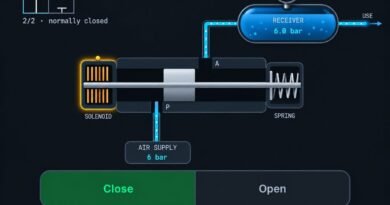
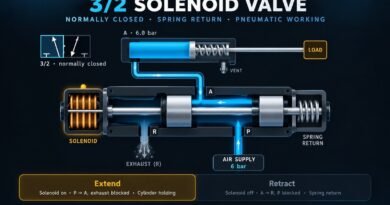
More air opens the valve. Lose the air and the spring closes it.
Learn how an air-fail-close control valve operates with this interactive pneumatic animation. Adjust the 4–20 mA control signal, observe changes in actuator pressure and valve travel, and simulate instrument air failure to understand the valve’s fail-safe action.
How Does an Air-Fail-Close Control Valve Work?
An air-fail-close control valve is designed to move to the closed position when the instrument air supply fails. This is commonly achieved using a spring-return pneumatic actuator configured to close the valve when air pressure is lost.
1. Normal Operation
The positioner receives a 4–20 mA control signal from the DCS or PLC and regulates the pneumatic pressure supplied to the actuator. The actuator moves the valve stem to the required position.
2. Adjusting the Control Signal
Change the input signal in the simulator to observe the illustrative relationship between the control signal, actuator pressure and valve travel. Actual responses depend on the positioner calibration, actuator design and valve characteristics.
3. Instrument Air Failure
When the air supply is interrupted, actuator pressure decreases. The spring drives the valve toward its designated fail-safe closed position.
What Is Fail-Close Action?
Fail-close, also called fail-closed (FC), means that the valve is designed to reach or move toward the closed position following a specified failure, such as loss of instrument air. The exact action depends on the actuator, valve arrangement and any accessories installed.
Applications
Air-fail-close valves may be used where shutting off process flow is the required response to a loss of instrument air. The correct fail action must be determined from the process safety requirements and the control or shutdown philosophy.
Try the Interactive Simulator
- Adjust the 4–20 mA input signal.
- Observe the actuator pressure and valve travel.
- Cut the air supply.
- Watch the simulated spring-return action.
Engineering note: This simulator is for educational purposes. Its signal, pressure and travel relationships are illustrative and are not a substitute for actuator sizing, positioner calibration, fail-action verification or safety-system validation.
Frequently Asked Questions
What does air-fail-close mean?
It means the valve is intended to close when its specified pneumatic air supply fails.
Does every pneumatic control valve fail closed?
No. Depending on the actuator and valve configuration, a valve may fail open, fail closed or remain in its last position.
What is the role of the positioner?
The positioner compares the control signal with valve-position feedback and adjusts actuator pressure to achieve the commanded position.
What is the difference between fail-close and air-to-close?
Fail-close describes the valve’s response to a failure. Air-to-close describes the direction of movement when actuator air pressure increases. An air-to-close, spring-to-open arrangement typically fails open when air is lost; an air-to-open, spring-to-close arrangement typically fails closed.